Bedding · Sleep comfort
Percale or Sateen? Choosing Sheets by Feel, Weave, and Room Climate
The choice between percale and sateen is less a contest than a question of sensation: crisp or silky, airy or softly draped. Learn what the weave changes, how bedroom temperature affects the decision, and which care details matter after the first night.
Published November 12, 2026
Sheets are the first layer of a bed that the body notices. Before a duvet cover, before the pillowcase cools against a cheek, there is the fabric beneath a sleeper’s hand and shoulder: its texture, its weight, the way it handles warmth through the night. A sheet can feel crisp and freshly pressed, or smooth and softly fluid. Those differences often begin with the weave.
Cotton percale and cotton sateen are two familiar choices, each with a distinct character. Percale is associated with a matte finish and a cool, crisp hand. Sateen is generally smoother, with a subtle sheen and a softer drape. Neither is automatically better, and neither guarantees a particular sleep temperature. Fiber, fabric weight, room conditions, bedding layers, and personal preference all have a part to play.
The practical question is not simply which fabric sounds more luxurious. It is which one you are likely to enjoy night after night—and which will suit the climate of your bedroom, your laundering habits, and the other bedding on the bed.
First, understand what “weave” means
A fabric’s weave describes how its threads cross one another. In a plain weave, threads pass over and under each other in a regular pattern. Percale is commonly made using this structure. The result is a balanced surface that tends to feel crisp and even, with a clean, matte appearance.
Sateen uses a different arrangement, in which threads float over several threads before passing under another. That construction exposes more of the thread surface on one side, helping create a smooth hand and gentle luster. In cotton sateen, the effect is not the same as satin made from silk or synthetic fibers: “sateen” names the weave, while cotton identifies the fiber.
This distinction is useful, but it is not a complete quality rating. A weave does not tell you everything about the cotton, the yarn, the finishing, or how the fabric will behave after repeated washing. Two sheets labeled percale can differ in weight and feel; the same is true of sateen. If possible, consider the full product description and, when shopping in person, handle the cloth rather than relying on the name alone.
Percale: crisp, breathable, and unassuming
Percale appeals to people who like a fresh, lightweight sensation. Its surface is usually matte rather than shiny, and its hand can bring to mind a neatly made hotel bed or a cotton shirt that has just been laundered. It tends to feel less slippery than sateen, which some sleepers prefer when they move around during the night.
Because percale is often made as a relatively light fabric, it can feel airy and comfortable in a warm room. That makes it a common choice for hot sleepers and for households that keep bedding simple in summer. But “breathable” is not a promise that a sleeper will never feel warm. A thick mattress protector, heavy duvet, humid air, and a person’s own temperature all influence the experience.
Percale may also soften with use and washing. Its initial crispness can be part of the attraction, though people seeking a very smooth, fluid surface may find it a little too dry or papery at first. It can wrinkle more visibly than a smoother weave, particularly if it is left bunched in a laundry basket or allowed to dry unevenly. For some, those creases are part of cotton’s relaxed character. For others, they are a reason to choose differently.
A related example in the broader bedding category is the BOVI Bitsy Dots duvet cover, made from 100% cotton percale. It is a duvet cover, not a sheet, but it illustrates the weave’s crisp, breathable character in a bed layer. Its description specifies a 200-thread-count fabric and an easy-care finish, details that show how weave is only one part of a textile’s feel and upkeep.
Sateen: smooth, softly lustrous, and more draped
Sateen is often chosen for its smooth surface. It glides more readily beneath the hand and can feel soft and supple against the skin. Its gentle sheen gives a bed a slightly more polished appearance, while its drape can make sheets look fluid rather than sharply tailored. That combination makes sateen a natural fit for sleepers who favor softness over a crisp, cool first impression.
The way a sateen sheet feels depends on more than the word on its label. Cotton quality, yarn construction, finishing, and fabric weight all contribute. A lightweight sateen may feel notably different from a heavier one. Its smoother construction can also make it seem warmer to some sleepers than a comparable percale, though room temperature and bedding layers remain decisive.
Sateen can be a comfortable option in a cool bedroom or for someone who likes a more enveloping bed. It is not reserved for winter, however, and it does not necessarily make a room feel hot. If you sleep warm, try to assess the complete setup: the sheet, duvet, mattress covering, and airflow in the room. A light duvet or fewer top layers may matter more than changing the weave.
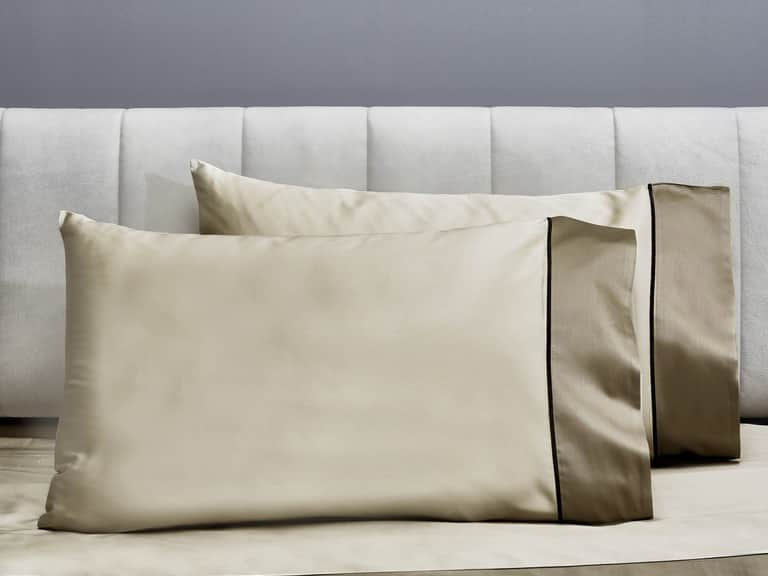
For a related example of cotton sateen’s use in bedding, the Gouache pillowcases are described as long-staple cotton sateen with a coordinating sateen border and contrast embroidery. They are pillowcases rather than sheets, but they can help illustrate how a smooth, refined fabric surface might work as an accent alongside other bedding. Check the construction details carefully when comparing products: a trim or border can have a different structure from the main fabric.
Match the weave to your room climate
The climate of a bedroom is not just the number on a thermostat. It includes humidity, ventilation, sunlight, the insulation of the home, and how much bedding is layered over the sleeper. A room that feels cool at bedtime may become warm by dawn. A mattress or duvet that retains heat can also change how sheets feel in use.
If your room is consistently warm, or if you often wake feeling overheated, percale is a sensible place to start. Its crisp, airy feel may be more comfortable than the smoother, more closely draped sensation many people associate with sateen. Pairing it with breathable bedding and choosing a lighter cover can help create a less insulated bed.
In a cooler room, sateen’s smoothness and soft drape may feel especially inviting. If you like to feel cocooned, it may suit your preferences across seasons. Yet a warm sleeper in a cool room could still prefer percale; personal temperature and tactile comfort matter as much as the room itself.
Humidity deserves attention, too. When the air is damp, fabrics may feel less crisp and the body can find it harder to release heat. In that setting, the whole sleep environment matters: ventilation, bedding weight, and laundering frequency can all contribute to comfort. No sheet weave can regulate a room’s climate by itself, but choosing a surface you enjoy can make the bed feel more accommodating.
For year-round use, think in terms of flexibility rather than a single perfect fabric. Some households keep one weave throughout the year and adjust the duvet or blanket. Others use percale in warmer months and a smoother, heavier-feeling option when the bedroom is cold. Both approaches can work; the right answer depends on storage, budget, and how much your conditions change from season to season.
Thread count: one clue, not the verdict
Thread count is often treated as a shorthand for softness or quality, but it measures only the number of threads in a defined area of fabric, according to the way the maker counts them. It does not describe the fiber’s quality, the thickness of the yarn, the weave, or the finishing. A higher figure alone does not guarantee better sheets.
When comparing options, read thread count alongside the fiber and weave. A 200-thread-count percale can be intentionally crisp and light; a cotton sateen at a different count may feel smoother or more substantial. Neither figure predicts exactly how a sheet will feel on your skin. Construction and personal response still matter.
Be cautious of treating a number as a universal measure. Counting practices can vary, and unusually high claims may not mean the fabric will be more comfortable or longer-lasting. A clear description of fiber content, weave, care instructions, and dimensions is often more useful than chasing a headline number.
Durability and care: the life after laundry day
Sheets are washed often, so the best choice is one that fits the household’s routine. Begin with the care label. Follow its water-temperature and drying guidance, use detergent as directed, and avoid assuming that all cotton bedding should be treated the same way. Excess heat can contribute to shrinkage or wear, while overloading a machine can leave sheets poorly rinsed and tangled.
Percale’s plain weave gives it a straightforward, closely interlaced structure, but durability still depends on the quality of the fabric and how it is cared for. Its crisp surface may become softer over time. Wrinkles are common, and removing sheets promptly from the dryer or line-drying them evenly can help reduce deep creases.
Sateen’s smooth surface and luster can be appealing, though abrasion and rough handling may affect its appearance over time. Turning pieces inside out where appropriate, washing with similar fabrics, and avoiding harsh treatment can help preserve a more even finish. Always defer to the manufacturer’s care label rather than relying on general rules.
Fit is part of everyday performance. Confirm that the fitted sheet’s pocket depth suits the mattress, including any topper, and check that the set contains the pillowcases you need. A sheet that pulls loose or strains at the corners can disrupt sleep regardless of its weave. Bed size labels are useful starting points, but exact dimensions help avoid surprises.
A practical way to decide
If you are choosing without touching the fabric, start with the sensation you already know you like. Think about a favorite cotton shirt, a well-worn pillowcase, or the feel of hotel bedding. Do you want a crisp surface that feels fresh and matte, or a smoother surface that moves softly with the bed? That preference is more informative than a trend or a thread-count ranking.
- Choose percale as a starting point if you prefer a crisp, matte feel, sleep warm, or want a lighter, airy impression.
- Consider sateen if you like a smooth surface, a gentle sheen, and a softer drape, or if your room is often cool.
- Compare the complete specifications including fiber content, fabric weight if provided, weave, dimensions, and care directions.
- Account for the whole bed because the duvet, protector, mattress, and room airflow can influence warmth as much as the sheet.
- Be realistic about upkeep by considering how often you wash, dry, and make the bed, and how much visible wrinkling bothers you.
When shopping in person, touch the fabric and notice whether it feels cool, dry, slick, or substantial. If ordering online, look for precise fiber and construction details, not just broad claims such as “luxury” or “cooling.” Reviews may offer useful clues, but people describe texture differently; one person’s crisp can be another person’s rough.
The bed is a system, not a single fabric
Sheets work alongside everything else on the bed. A breathable duvet cover cannot compensate for a room with poor ventilation, and a cool-feeling sheet cannot guarantee comfort under a heavy, insulating comforter. Consider how each layer contributes: mattress protector, fitted sheet, top sheet, duvet cover, blanket, and pillows.
Color and pattern influence the room’s visual mood, but they need not dictate comfort. A crisp percale sheet can sit beneath a richly colored duvet, while sateen pillowcases can add a smooth contrast to a more textured bed. The task is to balance tactile preferences and practical needs with the appearance you want in the room.
That is why the percale-versus-sateen decision is best made without a universal winner in mind. These weaves offer different routes to comfort. One is not inherently more breathable, durable, or luxurious in every construction; the details and the sleeper determine the outcome.
The bottom line
Percale and sateen are two distinct approaches to cotton bedding. Percale typically brings crispness, a matte finish, and an airy sensation. Sateen generally offers a smoother hand, subtle luster, and softer drape. Temperature, however, depends on more than weave: room climate, fabric weight, fiber, bedding layers, and personal warmth all shape the night.
Begin with the feel you prefer, then check the construction, care instructions, and fit. If the bedroom runs warm and you enjoy a crisp surface, percale may be the natural choice. If you favor smooth softness or sleep in a cooler room, sateen may feel more at home. The best sheets are not the ones with the most impressive label. They are the ones that make getting into bed feel right—and remain comfortable after the laundry is done.